Task preparation
Confirm that the learner reviews the task, gathers the right information, and prepares the work area.
Immersive safety training
Augmented reality assessment that helps instructors evaluate whether a learner can apply the procedure, make the right checks, and complete work on actual equipment.
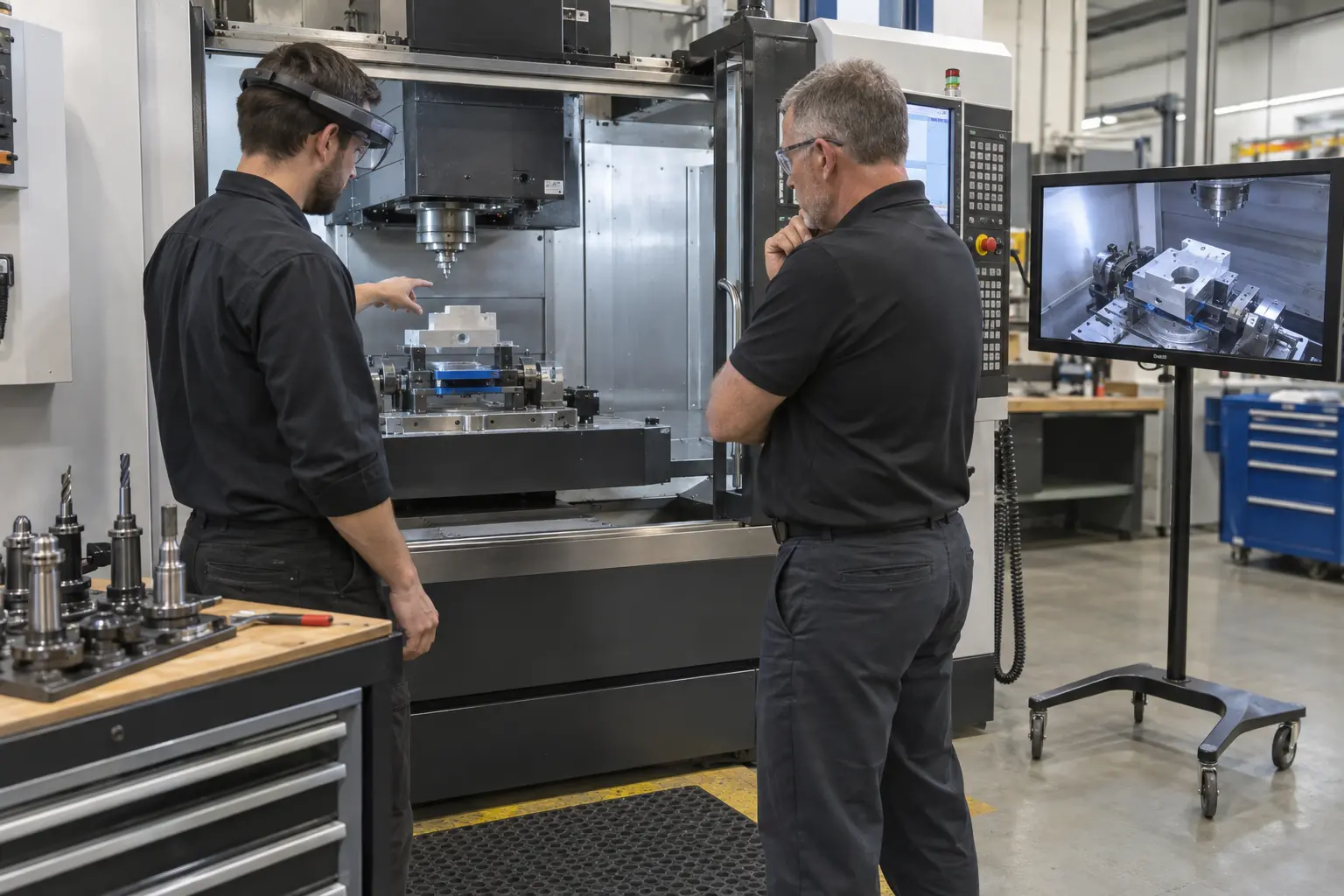 Assessment on real equipment shows whether a learner can apply the procedure outside the classroom.
The training role
A written quiz can confirm recall, but it does not show whether someone can find the correct component, prepare the work area, follow the sequence, or recognize that a condition is wrong. AR assessment keeps the real machine at the center of the evaluation.
The system can present the task, record required confirmations, identify missed steps, and give the assessor a consistent scoring structure. Prompts can be limited so the learner must demonstrate the procedure rather than follow a tutorial.
Practice areas
Assessment criteria can cover preparation, sequence, verification, work quality, communication, and response to an unexpected condition.
Confirm that the learner reviews the task, gathers the right information, and prepares the work area.
Evaluate whether the learner identifies the correct controls, parts, tools, and inspection points.
Track the required order of work and flag steps that are skipped, repeated, or completed incorrectly.
Require readings, observations, or confirmations that show the learner checked the result.
Present a condition that requires the learner to stop, ask for help, or choose the approved response.
Organize observations and results so the instructor can deliver specific feedback.
Scenario design
An assessment can cover a complete task or isolate the steps that are most critical, frequently missed, or difficult to observe consistently.
Evaluate setup, inspection, controls, and safe startup before a learner works independently.
Observe preparation, component identification, procedure use, and final verification on the machine.
Check whether an experienced worker still performs the critical steps after time away from the task.
Repeat a focused portion of the task after an error, audit finding, or process change.
Program configuration
The evaluation can reflect your equipment, work instructions, allowable prompts, critical errors, scoring rules, and documentation process.
AR Skills Assessment supports a structured evaluation process. It does not by itself authorize work, replace qualified judgment, satisfy every regulatory requirement, or remove the employer's responsibility to verify competency under real operating conditions.
View all training modulesAR Skills Assessment planning
Share the audience, work environment, current procedure, and training goals. We can define the right scenarios, feedback, assessment, and deployment model for your organization.
Request a demo